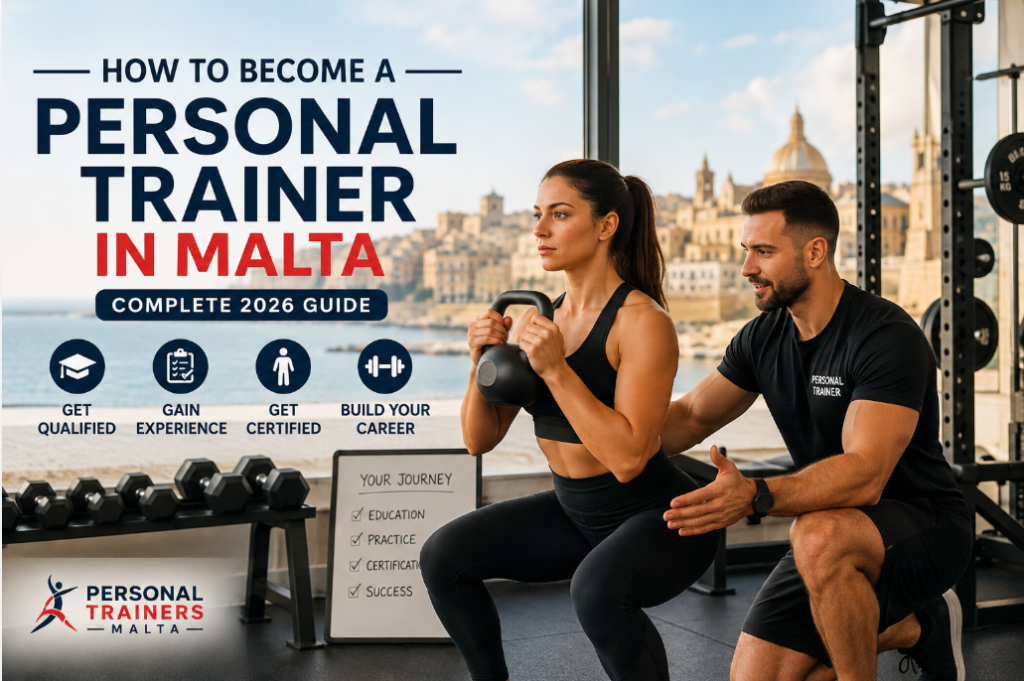
Malta’s fitness industry has never been busier. Between a growing wellness culture, a booming tourism sector, and a population that’s more health-conscious than ever, gyms across Sliema, St Julian’s, Valletta and beyond are looking for qualified coaches. If you’ve been searching for how to become a personal trainer in Malta, you’re eyeing a career with real demand, flexible working hours, and the kind of job satisfaction that comes from genuinely changing people’s lives.
But turning that passion into a paycheque isn’t just about loving the gym. You’ll need the right qualification, a clear understanding of what employers (and clients) expect, and a realistic plan for those first few months. This guide walks you through exactly what it takes, step by step, to become a certified personal trainer in Malta in 2026.
What Does a Personal Trainer Actually Do?
Before diving into qualifications, it helps to understand the job itself. A personal trainer works one-to-one (or in small groups) with clients to assess their fitness levels, design tailored training programmes, and coach them safely toward specific goals, whether that’s weight loss, strength, mobility, or sports performance.
In Malta specifically, personal trainers often wear a few extra hats. Many combine gym-based coaching with outdoor sessions (Malta’s climate makes year-round outdoor training genuinely appealing), and a growing number offer online coaching to clients across the UK and Europe, since a Malta-based qualification is internationally recognised.
Personal Trainer vs Fitness Instructor: What’s the Difference?
This is one of the most common points of confusion for anyone starting out, so it’s worth clarifying early.
Fitness Instructor (EQF Level 3): Qualifies you to supervise gym floors, take clients through general workouts, and deliver group inductions. It’s the entry-level qualification.
Personal Trainer (EQF Level 4): Builds on the Fitness Instructor qualification and allows you to work one-to-one with clients, design bespoke programmes, run in-depth consultations, and charge premium rates for personalised coaching.
Most people who want a genuine PT career complete both qualifications, either back-to-back or as a combined package, since a Fitness Instructor qualification is a prerequisite for Personal Training study.
Step-by-Step: How to Become a Personal Trainer in Malta
Step 1: Check You Meet the Entry Requirements
To enrol on a personal training course in Malta, you’ll typically need to:
Be at least 18 years old when the course starts
Have a reasonable level of personal fitness (the course is physically active)
Hold a recognised Fitness Instructor qualification before progressing to Personal Trainer level (or enrol on a combined package that includes both)
No prior gym or coaching experience is required; most students start from scratch.
Step 2: Choose an Accredited, Internationally Recognised Course
This step matters more than most people realise. Not every “personal trainer certificate” carries weight with employers or gym insurers. Look for courses that are:
CIMSPA-endorsed (the Chartered Institute for the Management of Sport and Physical Activity the UK’s recognised professional body)
Recognised by ICREPS/EREPS member organisations, which allows you to register and work internationally
Approved by MFHEA (Malta Further and Higher Education Authority), confirming the qualification meets Maltese education standards
An accredited course isn’t just a formality; it’s what allows you to get insured, get hired by reputable gyms, and eventually work abroad if you choose to.
Step 3: Complete the Online Theory and In-Person Practical Training
Most modern personal training courses in Malta use a hybrid learning model, and for good reason: it lets you study around a job or family commitments rather than putting life on hold.
Typically, this looks like:
8–12 weeks of online study, covering anatomy and physiology, principles of nutrition, client consultations, and programme design
A practical training block in Malta (often a single intensive week or weekend), where you apply what you’ve learned under the supervision of experienced coaches, and complete your practical assessments
This structure suits both Malta-based students and those studying from the UK or elsewhere in Europe who travel in specifically for the practical component.
Step 4: Get Certified and Register with the Right Bodies
Once you pass your theory and practical assessments, you’ll receive your qualification certificate. From here, you can register with recognised bodies (such as CIMSPA in the UK, or relevant EREPS-affiliated registers in Europe), which strengthens your credibility with employers, insurers, and clients who search for verified trainers online.
Step 5: Start Building Your Client Base
This is where many new trainers underestimate the work involved; the qualification gets you in the door, but building a sustainable income takes a deliberate plan. Options in Malta typically include:
Joining an established gym as an employed or freelance trainer
Renting floor space or hours at a semi-private studio
Building an online coaching client base (increasingly popular among Malta-qualified trainers working with UK and EU clients)
Launching your own personal training business entirely
Good courses will include at least some guidance on client acquisition, pricing, and professionalism. This is worth checking before you enrol, since coaching skills alone don’t guarantee a full client book.
How Long Does It Take to Become a Personal Trainer in Malta?
Timelines vary depending on the course and how many qualifications you’re combining:
Fitness Instructor only: around 10 weeks
Personal Trainer only (if you already hold a Fitness Instructor qualification): around 12 weeks
Combined Fitness Instructor + Personal Trainer: around 24 weeks, studying part-time alongside work or other commitments
Because most of the coursework is online and self-paced, many students complete their qualification while still working their current job.
How Much Does a Personal Trainer Course Cost in Malta?
Course pricing in Malta generally falls into the following ranges for 2026:
Fitness Instructor qualification: roughly €1,250
Personal Trainer qualification: roughly €1,650
Combined Fitness Instructor + Personal Trainer package: roughly €2,780
It’s worth comparing what’s actually included in that price; some providers charge extra for practical weekends, resits, or study materials, so always ask for a full breakdown before committing.
How Much Can You Earn as a Personal Trainer in Malta?
Earning potential depends heavily on your business model. Employed trainers at gyms typically earn a base wage plus session-based bonuses, while self-employed trainers who build a strong one-to-one client base, particularly those offering premium or online coaching, can earn significantly more, since they set their own rates. Malta’s relatively small, close-knit fitness community also means reputation and word-of-mouth referrals go a long way toward a stable income.
Why Study with SteelExtreme Academy?
SteelExtreme Academy was built on the foundation of SteelExtreme Fitness, Malta’s longest-standing semi-private personal training facility, meaning our courses are shaped by people who coach real clients every single day, not just theory. Our hybrid model lets you study from anywhere in Malta, the UK, or Europe, with practical training delivered in person by working industry professionals. Every qualification is internationally recognised through CIMSPA, MFHEA and ICREPS-aligned bodies, and we support graduates beyond certification with career and business guidance.
Common Mistakes to Avoid When Starting Out
A handful of avoidable mistakes trip up new trainers in Malta more than anything else:
Choosing a course based on price alone. A cheaper certificate that isn’t CIMSPA- or MFHEA-recognised can quietly limit which gyms will hire you and which insurers will cover you.
Skipping the business side entirely. Being a skilled coach and running a full client book are two different skills; look for a course that at least touches on pricing, marketing, and client retention.
Underestimating the practical component. Online theory is convenient, but the in-person practical weekend is where real coaching confidence is built. Don’t treat it as a formality.
Waiting for the “perfect” moment to start. Most students begin their course while still working another job; you don’t need to quit anything to get qualified.
Avoiding these early on makes the difference between a qualification that sits in a drawer and one that turns into an actual career.
Frequently Asked Questions
Do I need experience to become a personal trainer in Malta?
No. Most students enrol with no prior coaching experience; the course is designed to take you from beginner to certified professional.
Can I study to become a personal trainer online while living in the UK?
Yes. The theory can be completed online from anywhere, with the practical assessment weekend typically completed in Malta or a selected UK location.
Is a Malta personal trainer qualification recognised abroad?
Yes, provided it’s accredited through bodies like CIMSPA and ICREPS/EREPS, which allow graduates to register and work internationally.
What’s the difference between a Fitness Instructor and a Personal Trainer qualification?
A Fitness Instructor qualification lets you supervise gym floors and general workouts; a Personal Trainer qualification (which usually requires the Fitness Instructor level first) lets you work one-to-one and design bespoke client programmes.
Ready to Start Your Journey?
Becoming a personal trainer in Malta is one of the most accessible ways to turn a genuine interest in fitness into a flexible, rewarding career, but the qualification you choose matters. Look for accredited, internationally recognised training, a realistic study timeline, and a provider that supports you beyond the certificate.
Explore our Course Options or book a free discovery call with SteelExtreme Academy to find the right path for your fitness career.